
Pride in Canada - Ottawa Capital City Pride
- by Ronalee Carey Law
August 2026
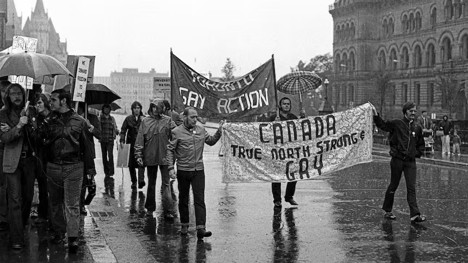
Photo Information: The We Demand protest on August 28, 1971. (Jerald Moldenhauer, “Ottawa March Demonstrators,” The ArQuives Digital Exhibitions)
This newsletter is guest-written by Ronalee Carey Law Paralegal, Barbara Ann. The article features special contributions from each staff member about growing up Queer in Canada.
Special thanks to The ArQuives' Digital Exhibitions for inspiring this newsletter.
At Ronalee Carey Law, we represent individuals who are fleeing persecution based on their sexual orientation and gender identity and expression. Though Canada is now a beacon of hope for many Queer individuals from around the world, we must remember that Canada has its own history of discrimination and exclusion against members of the Queer community.
We hope everyone will learn some Canadian Queer History in this newsletter, through both our individual testimonials and the resources posted. Queer History is often erased and difficult to access. We encourage you to speak with Queer people of different age groups in your life, not only to remember how recently we received our rights, but also to shift your perspective and better understand how those rights and greater North American social acceptance have shaped how Queer youth have grown up over the last two decades.
Conversations about Queer rights in North America are often very centred around modern history in the United States. Long before either Canada or the United States existed, Indigenous and First Nations Communities across Turtle Island had their own laws surrounding Queer peoples. Colonization brought its own rules, first socially and then legally criminalizing people who had lived freely in their communities.
However, Canada has frequently been further along than other British colonies (and former British colonies) in removing the ‘sodomy laws’ and moving back towards Queer rights. While the Stonewall riots took place in June 1969, Canada had already begun the process of decriminalizing consensual homosexual acts on May 14th of the same year. Other forms of criminalization remained and were even enacted after the start of decriminalization, including a ‘Gross Indecency Law’ that laid charges for consenting homosexual acts in public, such as kissing; ‘Bawdy House Legislation’ which sent targeted police raids to gay bars and bathhouses; and various laws that fell under the Federal Government’s “Gay Purge” from civic and military positions.
These continued persecutions from the 1960s through to the 1990s led to Gay Pride movements across Canada. The photo above shows Canada’s We Demand protest on August 28, 1971. Hopefully, the date helps explain why we bring you this newsletter in August and not during global Pride Month in June. Ottawa, Canada, still celebrates Pride Month in August, with numerous events, marches, workshops, markets and community gatherings.
Other rights came later. In 1996, the Canadian Human Rights Act was amended to prevent discrimination on the grounds of sexuality. Many provincial and territorial Human Rights Acts followed suit during the early 2000s. On July 20th, 2005, we had the Civil Marriage Act, and Canada became the 4th country in the world to legalize same-sex marriage. Transgender rights were slow to follow, and the same federal rights granted to gay, lesbian and bisexual individuals weren’t extended to transgender community members until June 19, 2017.
However, Queer safety and acceptance are also heavily rooted in the social aspects of our lives. How do families react? What types of communities have access to information? What does Queer representation in the media look like? These answers have changed over the years, especially due to Canada’s vastness. Even our definitions of “safety”, “access to information” and “representation” have changed over decades of growing social acceptance across our country. We hope you will enjoy our individual perspectives.
Ronalee
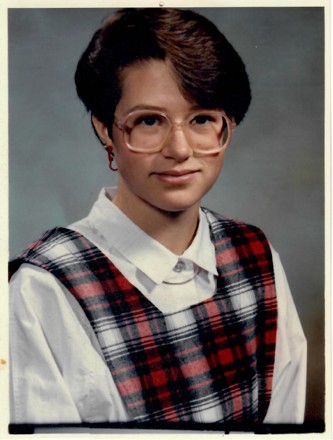
Photo Information: Ronalee, first day of Grade 9
I grew up in northern Ontario, in a small mining community called Wawa. I went to Michipicoton High School. When I lived there, Wawa had a population of over 5,000 people. Since then, it’s dropped to only 2,700, as the mine closed in 1998 and a mill closed in 2007. That means my old high school now has just over 100 students in grades 9 through 12. Most of Wawa's population is retired folk; the younger generation has moved on to find work.
I remember clearly my first day of grade 9 at Michipicoton High School. Arriving before the first bell, everyone went to their locker, put away their lunch and books, then walked around the halls in a circular fashion until the bell rang for class. No one just stood around talking. Back then, no one had watches counting their steps, but if they had, I would have said they were all trying to get their steps in before class started. The other thing I remembered was the couples. The couples held hands as they walked. Males and females holding hands, but of course, never males with males and females with females. The only time I ever saw a female student touch another female student was when a girl got dumped by her boyfriend, and two of her friends took her by the hands and pulled her into the bathroom so no one would see her crying. The queer kids, because, of course, there were other queer kids like me, were invisible.
When we proposed this topic for this month’s newsletter, I decided to do some research. What is it like for the queer kids in Wawa today? With only 105 registered students and 20 staff members at Michipicoten High School, how many queer kids would there even be, and how many resources could be dedicated to them? In a community with mostly older folks, how much acceptance is there for them? Are there Pride flags in the windows of stores to let them know they are welcome? Is Pride month celebrated?
A quick Google search led me, of course, to the Wawa Public Library. I found an article in the Wawa News that the Wawa Public Library had had a PRIDE Music Night in 2024. Public librarians always have the pulse on the community, so I contacted the head librarian, Suzie Jarrell, who let me know about other Pride events the library had held. She said the library started having Pride programming four years ago, with new events being added each year. It has become an impressive list of activities, mostly during the month of June, Pride Month. The librarian said these activities occurred with the full support of the library board and the Mayor and council, but there has been some negative feedback from the community and some difficulties in getting committee interest in starting a Pride committee. She directed me to a Facebook group to connect with individuals who might know about services for youth in local high schools. There, through people I knew from my time living in the community, I found that the French high school, though it didn’t have a club dedicated to 2SLGBTQI+ students, did have a few students who proudly identified as members of the community, and the school has a flag to show their support. As for my old school, Michipicoton High School, students identifying as 2SLGBTQI+ travel to Sault Ste. Marie with a teacher to join in events there. ‘The Soo’ is the nearest large community, a three-hour drive from Wawa.
So, things sound somewhat better for the queer youth in Wawa nowadays. They are few in number, but there are adults in the community willing to recognize their existence and to support them. Growing up in a remote northern town has enough challenges; I’m glad that things have improved for queer youth since I lived there.
Barbara Ann
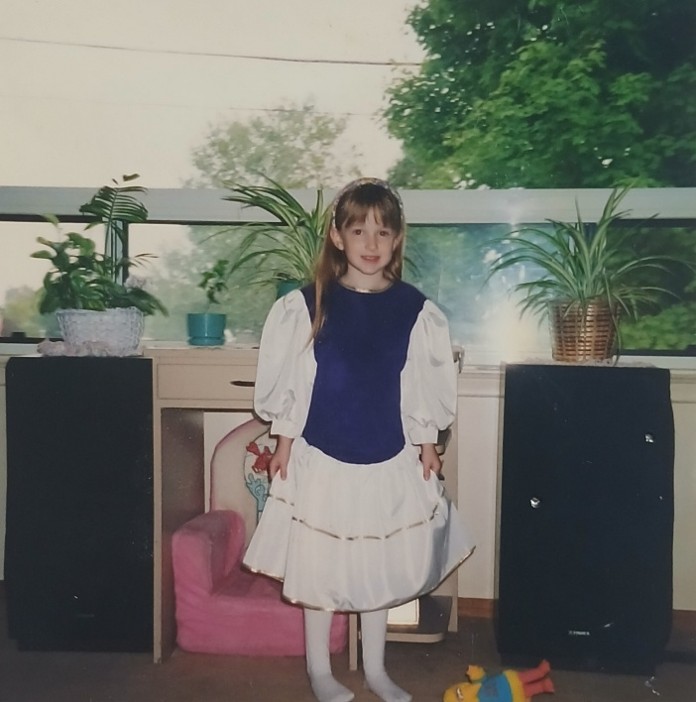
Photo Information: Barbara Ann, Kindergarten meet the teacher day
Growing up outside of the GTA across various small towns, most of my generation had more access to Queer media than I did. What I took in was very controlled, and so when I was little, I couldn’t fathom one girl liking another or one boy liking another. Others certainly had more access to media, and homophobic bullying was quite common in my elementary school towards anyone who appeared a little different. Fascinating to me is how many of us “came out” after elementary school. Somehow, not only did we congregate together, but somehow, before many of us even realized it ourselves, those who aren’t Queer had already “caught” us somehow.
Seeing Carol and Susan on the T.V. show Friends is the first Queer representation I remember having access to. Some adults in my family loved Friends, and I was allowed to watch it. When I talk to a younger friend now, I hear that side characters aren't usually considered representation anymore here in Canada.
My move to the Ottawa area expanded my knowledge. My ignorance of our own community members was not always met with kindness. I didn’t know where to go to learn or meet more Queer people. The first LGBTQIA+ people in the city were not welcoming and did not provide resources. I found and read paper copies of Xtra and learned a lot from the magazine until I found my people here in the city. When I started at Ronalee Carey Law, I made it my mission to provide Queer resources to our SOGIESC refugees.
Having younger Queer people in my family now, I am fascinated by the changes. In the 2010s, schools where I grew up were already letting youth use chosen names before legal name changes. I’ve had the huge privilege of being many co-workers’ first ‘out’ Queer person in their lives; being someone who isn’t offended by innocent ignorance and is happy to answer questions has turned some skeptical people into amazing allies. In those same years, my now-wife and I were denied housing on multiple occasions in Gatineau, forcing a move to Ottawa. Even in 2018, someone refused to do our hair for our wedding. Both things are illegal, but illegal and legal don’t capture the full lived experience.
It’s those conversations with younger family members that inspire me to speak with older Queer people and learn about their experiences. It’s so easy to forget how recently changes were made. Forgetting Queer History and the erasure of Queer History leads to quarrels over terms like “Queer” and “straight-passing” because the journey of why these terms existed is forgotten.
Leo
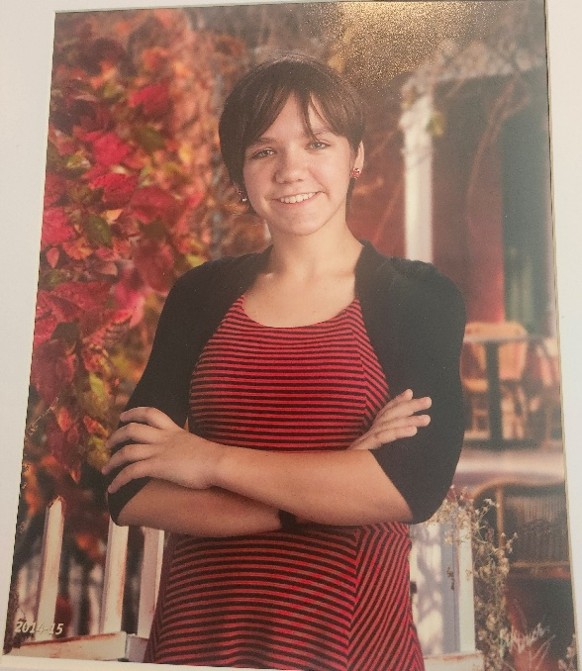
Photo Information: Leo, age 13, Grade 8 picture day
Having grown up in a small village named Woodlawn – it's between Dunrobin and Kinburn, there wasn’t a lot of talk about the LGBTQIA+ community. I had a vague idea that the community existed and knew that there were things other than heterosexual and homosexual, but not much more. By 13, however, I knew that I was different from most of my peers and community.
Coming out was difficult; I didn’t have friends or adults that I could speak to about the best way to do it. The reactions I received were varied, but I eventually attended Canterbury High School in Ottawa. Though there were LGBTQIA+ clubs and organizations at my school, I didn’t feel it was necessary to be involved in them.
I have a clear memory from around the time I was 7 years old. Growing up, I was a huge tomboy, resulting in most of my friends being boys. I had always been more into ‘boy toys’ - action figures, little green army men, toys that had been passed down from my older brother to me. I’d come home from school, gone up to my biological mother, and stated: “I think I was supposed to have been born a boy.” That was promptly shut down with a declaration of “No, you were born a girl. You’re a girl.” In my 7-year-old brain, I took that to be the way things were. I didn’t know that there was anything outside of ‘boy’ or ‘girl’. I moved on, or so I thought.
Fast forward to age 16, to a me who was much more knowledgeable about the community, gender identity, and sexuality. I struggled to find a label that fit, but I knew the name that I’d been given at birth and the pronouns that went with my assigned gender at birth weren’t the correct ones. I started asking my friends to call me Leo and using they/them pronouns. My grandma, who said “I’ve known you were gay since you were six,” when I came out, didn’t struggle as much as I thought she would with the new name. Pronouns are a bit harder, but even people in our community struggle with them. As much as the community has grown, there is still room for more growth and acceptance.
Even between queer individuals, the experiences can be so different. I remember watching ‘Love, Simon’ in theatres with a group of my high school friends. My best friend and I were both crying by the end of it. She was crying because she was happy. I was crying because I wished all stories had a happy ending and all parents could come around to their child’s sexuality and gender as easily as Simon’s parents did.
Now that I have fully settled into city living, I have become more involved in the community by attending various events and making new friends with those I meet there. I finished college and began working at Ronalee Carey Law, where we help a lot of Queer clients. I still look forward to the day when all Queer youth and children can have the same acceptance that Simon has in the movie.
Songyun
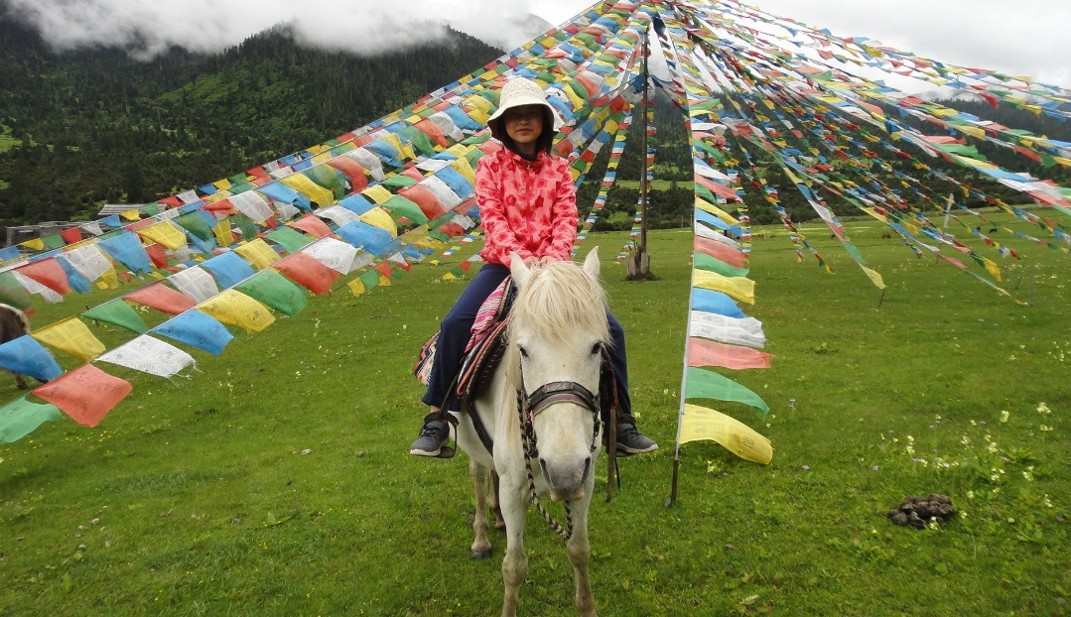
Photo Information: Songyun in Tibet at 11 years old
When Pride Month comes around each year, I reflect on how my perspective on queer activism and queer joy has changed as I have become more comfortable with my own queer identity. This year, we have decided to share our reflections as a firm in our August newsletter. I thought this was a brilliant idea because we are a firm made up entirely of queer individuals, yet our different intersectional experiences have definitively shaped our view of queer identity and our own queerness.
I’m sure most immigrant children would understand the feeling of having different and oftentimes conflicting values shaping our sense of identity. On the one hand, there are cultural values from home; on the other, there is the Western culture we live in and learn in school. Gender, sexuality and various queer expressions are conceptualized differently across cultures. The terms used are different, acceptance looks different, and discrimination faced by queer individuals is harder to translate into the Western context. In the Western world, my generation is largely familiar with and accepting of queer identities. Yet in China, my generation of queer individuals lives in fear of the consequences they may face if they come out. What remains true no matter what culture or country you are in is that queer individuals create their own community where they advocate, nurture, and care for each other.
I have observed that the general public, including some queer individuals, tends to move away from queer activism such as Pride because they view its importance as diminished as we ‘progress’ in queer rights or as we feel more settled in our own individual queer identity. There are a few issues with this approach to queer activism. To start, the reality of ‘progress’ is never linear, and formal rights don't always correlate accurately with lived experiences, especially for particularly marginalized groups within the community. The queer community has always been a community in its truest sense, where community members must have each other’s backs because the alternative is waiting for the world to care while our friends suffer from violence, discrimination, and death. As we have seen with the recent Western political trends, queer community continues to be a vulnerable target, exploited by politicians for their failures and the failing institutions in which they belong. No queer individual is safe unless all of us are safe, because discrimination sees only traits, labels, signals, and not persons.
Looking Forward
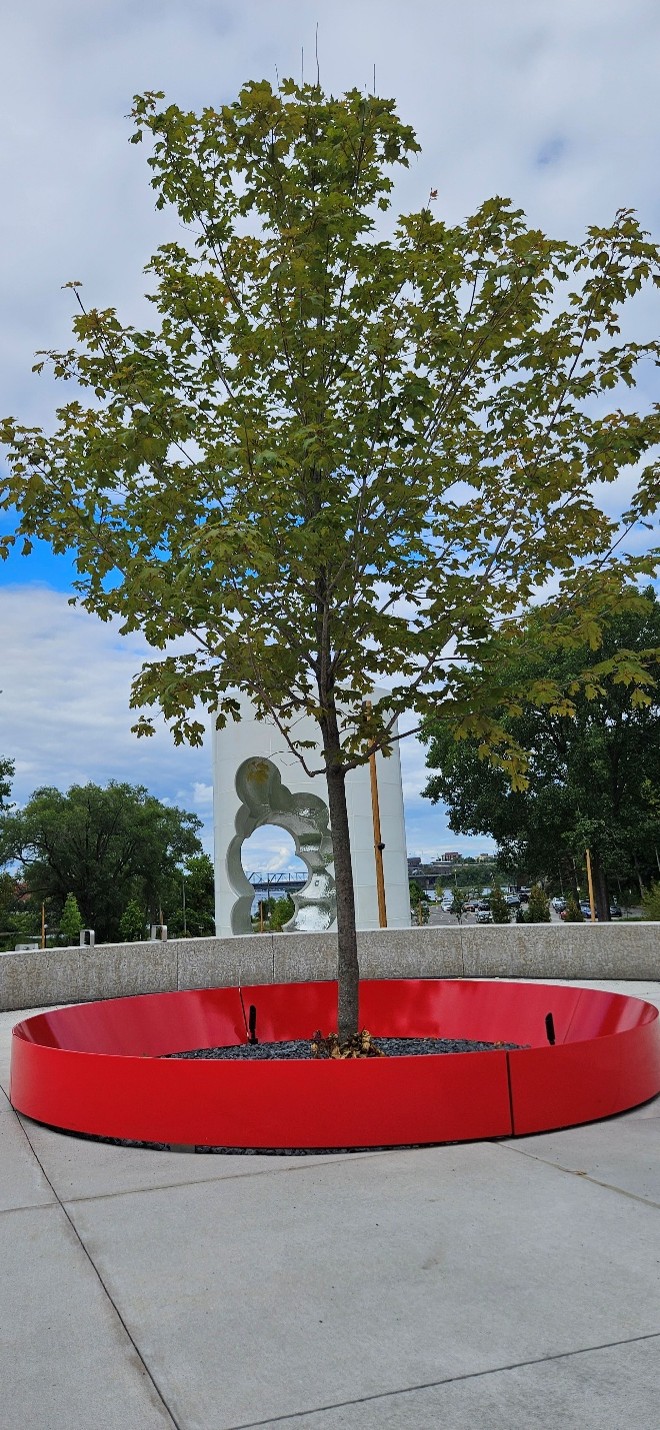
On August 20, 2026, a monument was unveiled in Ottawa to commemorate discrimination experienced by 2SLGBTQ+ people across Canada. This follows an apology in the Canadian Parliament to 2SLGBTQ2+ members of the military, RCMP, and federal public service who faced state-sponsored discrimination and dismissal during the so-called “LGBT Purge” or “Gay Purge”.
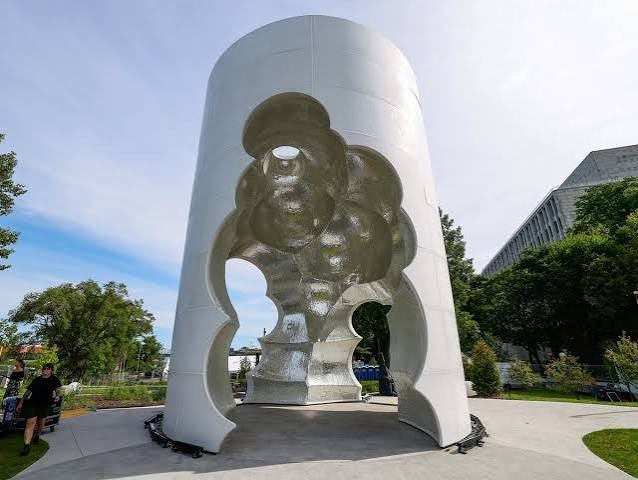
We plan to visit the monument together as a special staff event. Follow @ronaleecareylaw for pics!
ADDENDUM
On September 4th, 2026, the staff at Ronalee Carey Law met for lunch before visiting Thunderhead, the new monument to the LGBTQ Purge. While there, we learnt more about the history of the monument and took some photos.
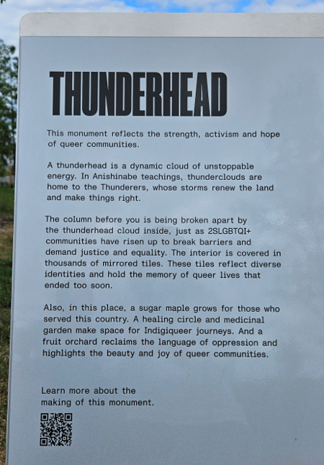
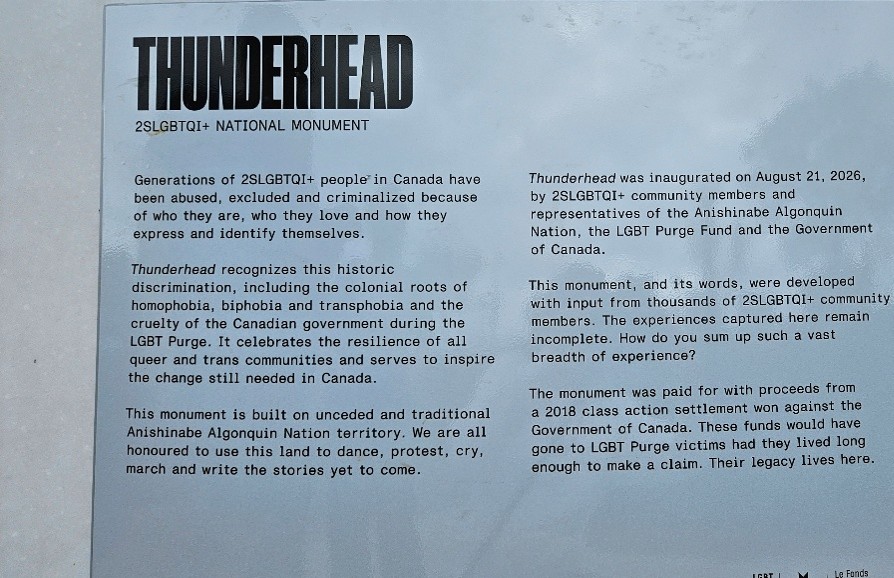
Photo Information: Along the path to the centre of Thunderhead, stone walls display plaques with information on the history of the LGBTQ Purge, the significance of the name, and where the funds for the monument came from.
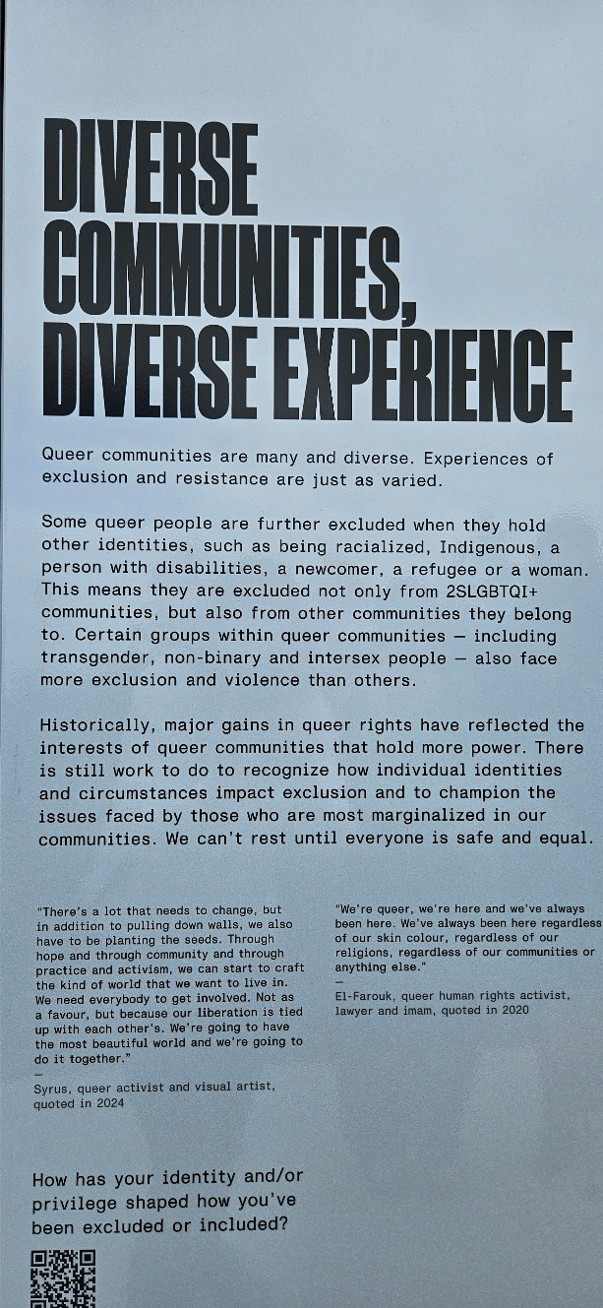
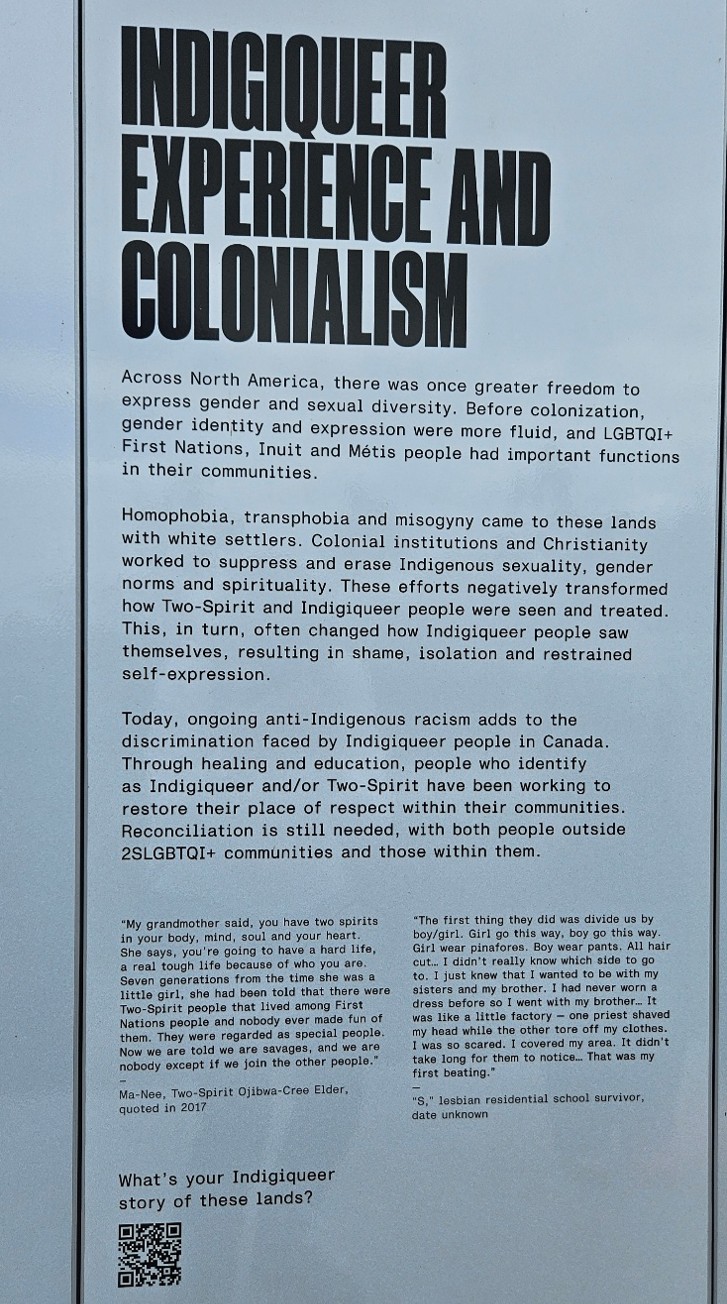
Photo information: Plaques explaining how being queer has affected people who have multiple identities, such as individuals with different gender expressions, BIPOC persons, Indigenous populations, refugees, women, and persons with disabilities.
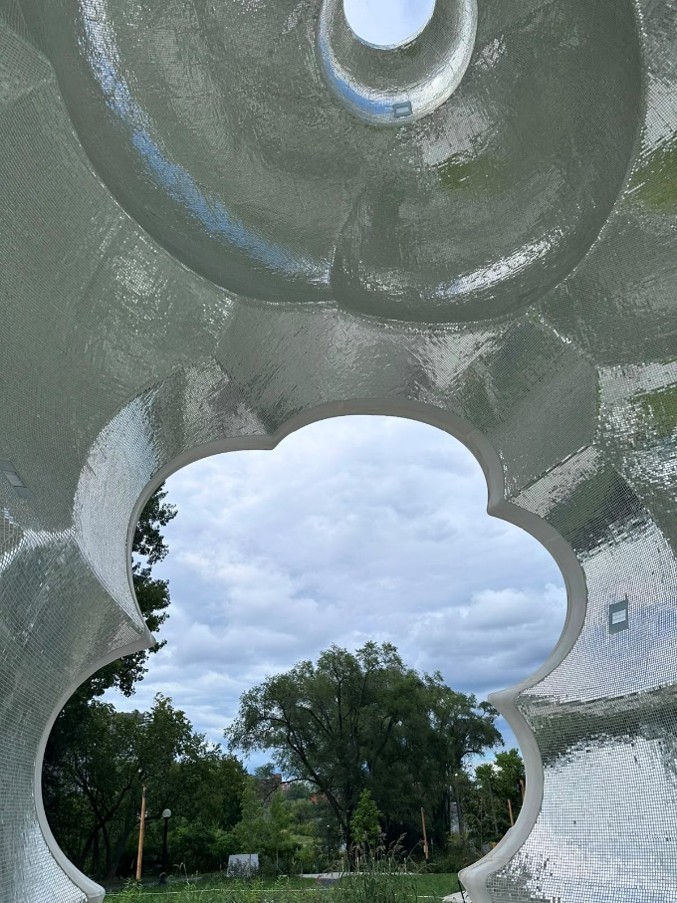
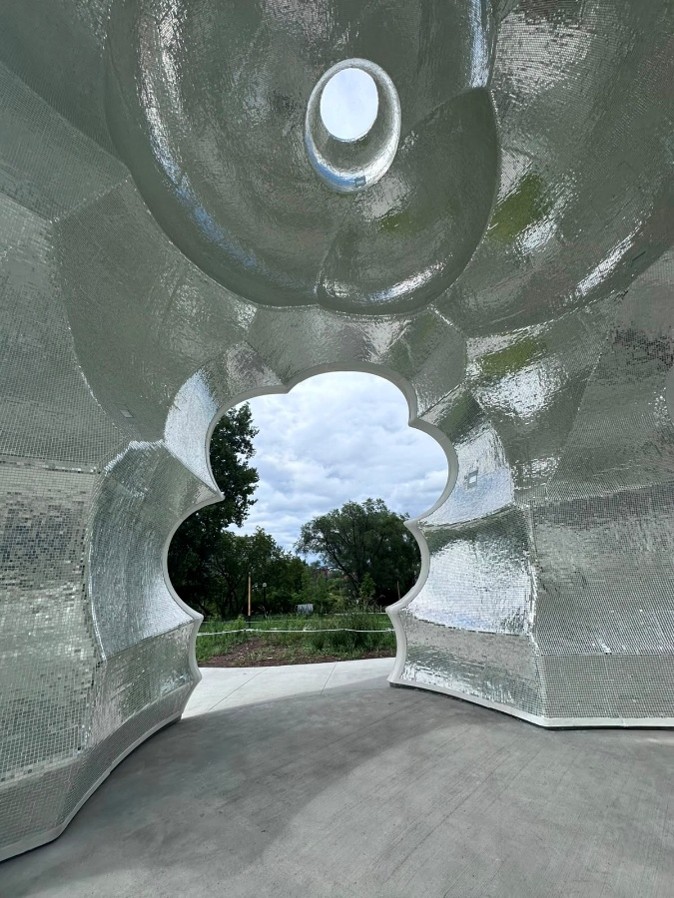
Photo Information: Photos taken inside Thunderhead.
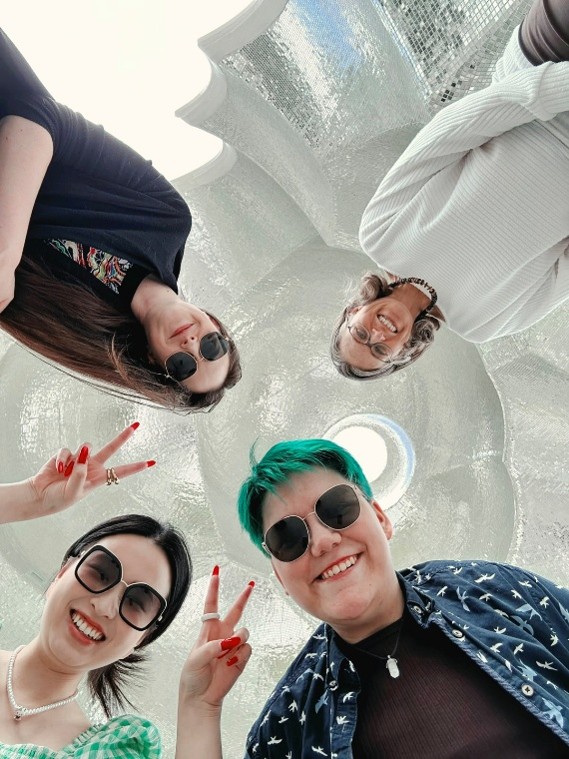
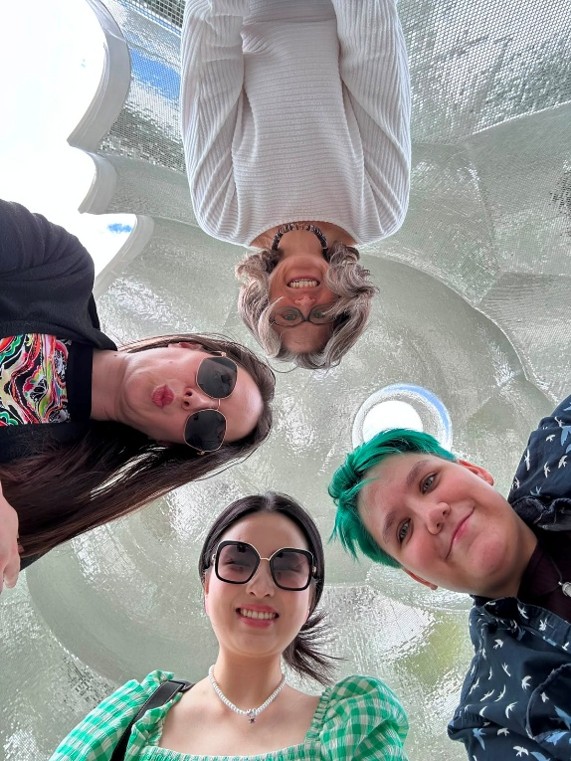
Photo Information: Barbara Ann, Ronalee, Songyun, and Leo posing inside the monument for a staff photo or two.
REFERENCES
The ArQuives' Digital Exhibitions - https://digitalexhibitions.arquives.ca/
Regulations of First Nations Sexuality by Martin Cannon, York University https://cjns.brandonu.ca/wp-content/uploads/18-1-cjnsv18no1_pg1-18.pdf
2SLGBTQ+ History – The Canadian Encyclopedia https://thecanadianencyclopedia.ca/en/timeline/lgbtq2
2SLGBTQIA+ History and Identities in Canada – Canadian History Museum https://www.historymuseum.ca/teachers-zone/2slgbtqia-history-and-identities-in-canada/
Queer Events - Canadian Queer History https://www.queerevents.ca/queer-history/canadian-history-timeline